It further pointed out that the twin balance sheet problem -- at the end of banks and corporate -- more attractive interest rates for borrowers in the bond market and from non-banking financial institutions are other reasons for slow bank credit growth.
Tuesday's policy announcement had a regulatory and development component.

There is evidence of asymmetric adjustment to monetary policy

Retail inflation eased to a one-year low of 4.75 per cent in May as prices of some kitchen items declined marginally, according to government data released on Wednesday. The Consumer Price Index (CPI) based retail inflation was 4.83 per cent in April 2024 and 4.31 per cent in May 2023 (previous low).

'Normally, the system is geared towards counting notes -- it is equipped to do x amount of work and one day you are asking them to do 20 x.' 'The processes involved are very complex.'

The central bank and Indian government has reached a "broad consensus" on the composition of a rate-setting panel.
The continuing global uncertainity has complicated the fight against inflation, opined Reserve Bank Deputy Governor Michael Debabrata Patra during the Monetary Policy Committee meeting held on February 8. According to the minutes of the MPC meeting released on Wednesday, RBI Governor Shaktikanta Das also mentioned that there is considerable uncertainty due to a host of global factors such as rising non-oil commodity prices. The RBI on February 8 hiked the key short-term lending rate by 25 basis points to 6.5 per cent, citing sticky core inflation.

The RBI on Friday said the impact of coronavirus outbreak on the economy will depend on the intensity, spread and duration of the deadly virus even as the central bank refrained from projecting any numbers for growth and inflation amid the widespread uncertainty. While announcing the seventh bi-monthly monetary policy statement for 2019-20, RBI Governor Shaktikanta Das said that in view of the impact of coronavirus pandemic, the growth projections for 4.7 per cent for the fourth quarter of 2019-20 and 5 per cent for the full fiscal are "now at risk".

The RBI kept interest rates unchanged at 8 per cent as widely expected.

In its Third Quarter Review of Monetary Policy 2012-13, the Reserve Bank of India has reduced the policy repo rate under the liquidity adjustment facility (LAF) by 25 basis points from 8.0 per cent to 7.75 per cent with immediate effect.

Prices of food items like cereals, pulses, and edible oils rose or remained steady in May, a Reserve Bank of India (RBI) report said, indicating there could be another higher inflation print. However, it observed that the Monetary Policy Committee's (MPC's) surprise move to increase interest rates bodes well for its credibility. The RBI's monthly State of the Economy report, released on Tuesday, citing high frequency food price data from the Ministry of Consumer Affairs for the period May 1-12, said the increase in the prices of cereals was primarily because of the surge in wheat prices.

All policy planners want low interest rate, says Jaitley

Endorsing Finance Minister P Chidambaram's call to banks to pass on the benefit of rate cuts to customers, RBI Governor D Subbarao on Thursday said the central bank is also "very conscious" of the need to be supportive of economic growth.
Reserve Bank has lowered interest rates by 0.50 per cent since January 2015.

The apex bank, however, may not aggressively tighten the monetary policy and is likely to resort to only a moderate 0.25 per cent hike in short-term borrowing rates and mandatory bank deposits with RBI, bankers said.

RBi pushes for reinvigorating private investments, clearing infra bottlenecks and providing big thrust to Pradhan Mantri Awas Yojana.
India is much better placed today to deal with future waves of the pandemic relative to the first wave, RBI deputy governor Michael Patra said.

Indian economy is gathering momentum in the second quarter, though inflation would continue to average above the central bank's comfort zone of 6 per cent, said an article in the RBI's monthly bulletin released on Thursday. The consumer price index (CPI) based retail inflation shot up significantly to 7.44 per cent in July, from 4.87 per cent in the preceding month, mainly due to soaring prices of tomato, vegetables and other food items. In his address to the nation on the Independence Day, Prime Minister Narendra Modi vowed to take more steps to contain price rise.
Shares of Anil Ambani-led Reliance Communications and Reliance Infrastructure gained five per cent each on expectation that rate cuts would help lower the interest cost burden of these companies.

Markets continued to fall on Monday, with the Sensex declining 94 points as investors remained cautious amid unabated selling by foreign funds and elevated crude oil prices ahead of the RBI's policy decision later this week. The 30-share BSE Sensex declined 93.91 points or 0.17 per cent to end at 55,675.32. During the day, it tanked 473.49 points or 0.84 per cent to 55,295.74.

The US Fed rate cut of 50 basis points is unlikely to have any significant impact on foreign inflows into India, Economic Affairs Secretary Ajay Seth said on Thursday. He said the US Federal Reserve has done what it assesses is good for the largest economy in the world, but the RBI will take a decision on interest rate cut keeping the Indian economy in mind. "It is a positive for the global economy, including the Indian economy. "It is a 50 basis points cut from a high level.
The Reserve Bank of India's tight monetary policy is expected to moderate India's economic growth rate to 8.1-8.6 per cent in 2008, against 8.5-9 per cent in 2007, Global rating agency Standard and Poor's said on Wednesday.

Reserve Bank of India Governor Shaktikanta Das on Friday said the country's economy is an island of stability despite two Black Swan events and multiple shocks. "In an ocean of high turbulence and uncertainty, Indian economy is an island of macroeconomic and financial stability," Das told reporters during the post policy press conference. He said the financial stability, macroeconomic stability and resilience of growth is being witnessed despite two Black Swan events happening one after the other and multiple shocks.
The Reserve Bank on Thursday said the country's wholesale price-based inflation and industrial production data should be improved and employment data availed for effective monetary policy management.

The decision by the Reserve Bank of India to introduce a unified regulatory framework on connected lending for all the regulated entities (RE) is expected to reduce the influence of business conglomerates in the Indian lending space, said bankers and experts. "Connected lending pertains to lending to related parties within the same business group. "While the RBI might appear more agreeable to allowing business conglomerates to own banking licenses, it deems it crucial to bolster regulations that would prevent conglomerate-owned banks from gaming the system," said Shivaji Thapliyal, head of research and lead analyst, YES Securities.
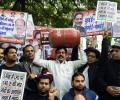
The rate of price rise for food articles stood at 11.51 per cent during January as against 2.41 per cent a month earlier, while for non-food articles it rose nearly three-fold to 7.8 per cent from 2.32 per cent in December, the data released by the ministry of commerce and industry on Friday showed.

Falling core inflation on the back of slowing economic growth is likely to create space for the Reserve Bank to ease monetary policy in the early part of the next year, rating agency Crisil said.

Raghuram Rajan said a six-member monetary policy committee will decide on interest rates.

The Reserve Bank of India may consider withdrawing excess liquidity in the system to tame high inflation in its monetary policy review later this month, Suresh Tendulkar, economist and former head of the Prime Minister's Economic Advisory Panel, said on Tuesday.

The banking sector in India is reeling under Rs 8 lakh crore of non performing assets (NPAs) or bad loans, of which PSU banks alone account for over Rs 6 lakh crore.
Former Reserve Bank Deputy Governor S S Tarapore on Thursday said that the apex bank should not lower its repo and cash reserve ratio rates in its forthcoming monetary policy review.

RBI's liquidity tightening stance had stumped the Street as a result of which bond yields had risen.

The RBI, which had been following soft monetary policy since September last year to inject liquidity into the system to help industry combat the impact of the global meltdown, on Tuesday reversed its stance by increasing the SLR by one per cent to 25 per cent, though it kept other rates unchanged.

The repo rate, at which the central bank lends short-term money to other banks, will continue to stay at 6 per cent.

In the case of Indian equities specifically, all eyes will now be on the next RBI monetary policy scheduled for September 29.

Fintech companies believe that the impact of Reserve Bank of India's order last week on unsecured loans will be visible in six to 12 months and prompt them to diversify and strengthen their secured portfolio. Fintechs which source funds through banks or non-banking finance companies (NBFCs) are looking at quickly building their secured portfolio options to at least 40 per cent of their total portfolio. "Over the medium to long term, as part of our product strategy, we are evaluating secured products which can be enabled over a digital platform" said Yogi Sadana, the founder of Zype, a lending-focussed fintech.

Market breadth depicted gains with 1,476 advances over 1,403 declines on the BSE. 140 stocks remained unchanged.

The wholesale inflation rose for the third consecutive month in May at 2.61 per cent on account of rise in prices of food articles, especially vegetables, and manufactured items. The wholesale price index (WPI) based inflation was 1.26 per cent in the previous month. It was (-) 3.61 per cent in May 2023. "Positive rate of inflation in May, 2024 is primarily due to increase in prices of food articles, manufacture of food products, crude petroleum & natural gas, mineral oils, other manufacturing etc," the ministry of commerce & industry said in a statement on Friday.

RBI, in its first bi-monthly monetary policy statement, left the short-term lending rate, or repo rate, unchanged at 8 per cent and the cash reserve ratio static at 4 per cent.
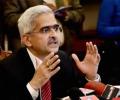
Amid prolonged uncertainty, continued policy support will be crucial for sustained economic recovery from the coronavirus pandemic, Reserve Bank Governor Shaktikanta Das said at the recent meeting of the Monetary Policy Committee. "In this period of prolonged uncertainty, it would be wise to remain agile and respond in a gradual, calibrated and well telegraphed manner to the emerging challenges," opined Das, according to the minutes of the MPC meeting released by the Reserve Bank on Thursday. Observing that economic recovery from the pandemic remains incomplete and uneven, he said, "continued support from various policies remains crucial for a sustained recovery." The governor said the renewed surge in international crude oil prices, however, requires close monitoring.
